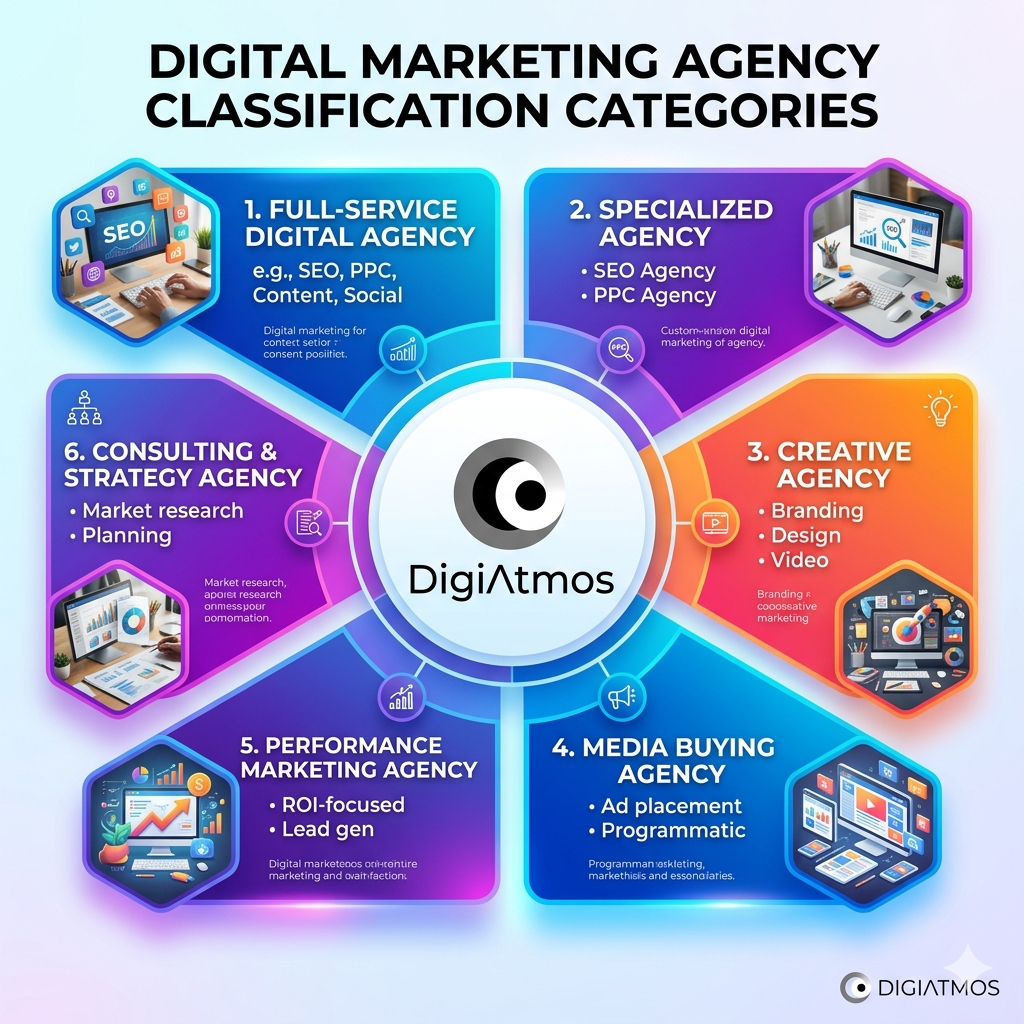
In today’s fast-growing online world, businesses rely heavily on digital marketing agencies to build their brand, generate leads, and increase sales. But not all agencies are the same. Understanding digital marketing agency classification categories helps businesses choose the right partner based on their goals, budget, and growth stage.
Let’s break down the main types of agencies in simple terms so you can easily understand which one fits your needs.
Digital Marketing Agency Classification Categories Based on Services
One of the most common ways to classify agencies is by the services they offer.
1. Full-Service Digital Marketing Agency
A full-service digital marketing agency provides everything under one roof. This includes:
- SEO (Search Engine Optimization)
- Social Media Marketing
- PPC Advertising
- Content Marketing
- Email Marketing
These agencies are ideal for businesses that want a complete online marketing strategy without hiring multiple vendors.
2. SEO Agency
An SEO agency focuses only on improving your website’s ranking on search engines like Google. They specialize in:
- On-page SEO
- Off-page SEO
- Technical SEO
- Keyword research and optimization
If your goal is to rank higher and get organic traffic, this category is perfect.
3. Social Media Marketing Agency
These agencies manage your presence on platforms like Instagram, Facebook, and LinkedIn. They help with:
- Content creation
- Paid ads
- Audience engagement
This is great for brand awareness and building a loyal audience.
4. PPC Agency
A PPC (Pay Per Click) agency focuses on paid advertising like:
- Google Ads
- Facebook Ads
- YouTube Ads
They help generate quick leads and conversions using paid campaigns.
Digital Marketing Agency Classification Categories Based on Business Size
Another important classification is based on the size of the agency.
1. Boutique Agency
A boutique agency is small but highly specialized. They usually offer personalized services and work closely with clients.
Best for:
- Startups
- Small businesses
- Local brands
2. Mid-Sized Agency
These agencies have more resources and a wider team. They can handle multiple services and clients at once.
Best for:
- Growing businesses
- Medium-sized companies
3. Large Agency
Large agencies work with big brands and enterprises. They have dedicated teams for each service and often handle global campaigns.
Best for:
- Corporates
- International brands
Digital Marketing Agency Classification Categories Based on Industry Focus
Some agencies specialize in specific industries.
1. E-commerce Marketing Agency
Focused on online stores, these agencies specialize in:
- Conversion optimization
- Product ads
- Shopping campaigns
They are experts in platforms like Shopify and WooCommerce.
2. Real Estate Marketing Agency
These agencies help realtors and property businesses generate leads using:
- Local SEO
- Google Ads
- Landing pages
3. Healthcare Marketing Agency
They work with clinics, hospitals, and doctors, ensuring compliance and trust-building strategies.
Digital Marketing Agency Classification Categories Based on Approach
Different agencies follow different marketing approaches.
1. Performance Marketing Agency
These agencies focus on ROI (Return on Investment) and measurable results like:
- Leads
- Sales
- Conversions
They rely heavily on data and analytics.
2. Creative Agency
A creative agency focuses more on branding, design, and storytelling. Their services include:
- Graphic design
- Video production
- Brand identity
Perfect for businesses that want a strong visual presence.
3. Inbound Marketing Agency
Inbound agencies focus on attracting customers through:
- Valuable content
- SEO strategies
- Lead nurturing
They help build long-term relationships with customers.
Digital Marketing Agency Classification Categories Based on Technology
Technology also plays a big role in classification.
1. Marketing Automation Agency
These agencies use tools to automate:
- Email campaigns
- Lead management
- Customer journeys
This improves efficiency and saves time.
2. Data-Driven Agency
A data-driven marketing agency focuses on analytics, tracking, and performance metrics to make decisions.
They use tools like:
- Google Analytics
- CRM software
- AI-based platforms
Why Understanding Digital Marketing Agency Classification Categories Matters
Choosing the right agency can directly impact your business growth. When you understand digital marketing agency classification categories, you can:
- Match your business goals with the right expertise
- Save money by avoiding unnecessary services
- Get better results with targeted strategies
For example, if you are a local business, hiring a boutique SEO agency may be more beneficial than a large full-service agency.
Final Thoughts on Digital Marketing Agency Classification Categories
The digital marketing world is diverse, and every agency has its own strengths. Whether you need SEO services, social media marketing, or a complete digital marketing strategy, understanding these categories helps you make smarter decisions.
Before choosing an agency, always:
- Check their portfolio
- Review case studies
- Understand their specialization
This way, you ensure that your investment brings real results.