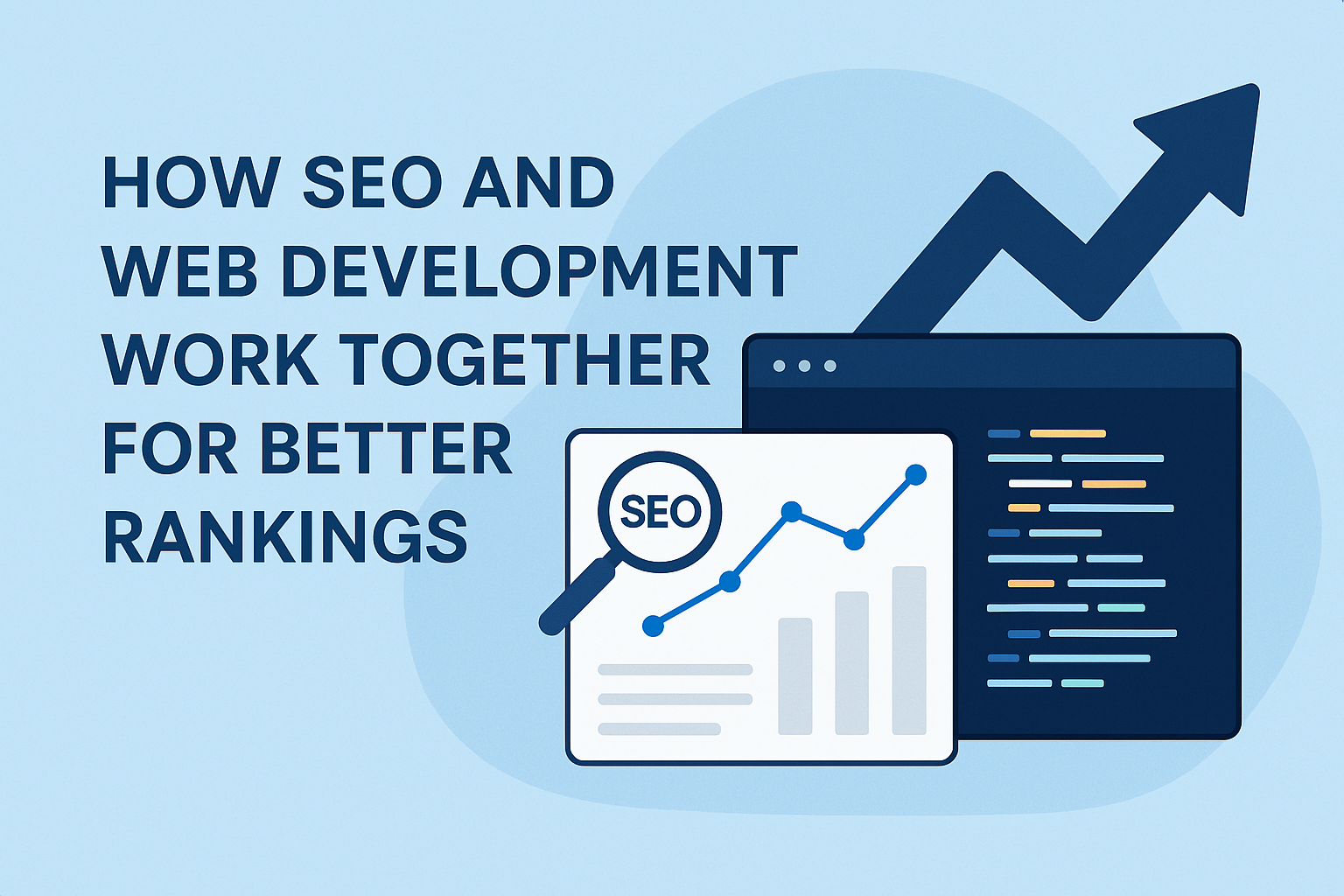
When it comes to building a strong online presence, SEO (Search Engine Optimization) and web development are two sides of the same coin.
You can have the most beautifully designed website in the world — but without SEO, no one will find it. On the other hand, even the best SEO strategy won’t perform well if your website is slow, unresponsive, or poorly built.
That’s why successful brands in 2025 understand this powerful truth:
👉 SEO and web development must work together to achieve better rankings, higher traffic, and improved user experiences.
In this blog, we’ll explain how SEO and web development go hand in hand, and why your business needs both to dominate search results.
1. Site Structure and Crawlability
Your website’s structure determines how easily search engines like Google can crawl and index your content.
✅ A well-developed site helps SEO by:
- Creating a logical hierarchy of pages (home, categories, subpages).
- Using clear, keyword-rich URLs.
- Including internal linking that connects related content.
💬 Example: A good URL structure looks like this —https://digiatmos.com/services/seo-optimization (SEO-friendly and descriptive).
🎯 Pro Tip: Developers should implement XML sitemaps and robots.txt files to help Google understand which pages to index.
2. Website Speed and Performance Optimization
Website loading speed is one of Google’s most important ranking factors. A slow site leads to high bounce rates and lower rankings.
✅ How web development supports SEO:
- Using lightweight code and optimized images.
- Implementing lazy loading for media.
- Utilizing content delivery networks (CDNs).
- Compressing CSS and JavaScript files.
💡 Fact: Even a 1-second delay in page load time can reduce conversions by 7%.
🎯 Pro Tip: SEO experts and developers must collaborate to measure Core Web Vitals — metrics like LCP, FID, and CLS — that impact Google’s ranking algorithms.
3. Mobile Responsiveness
In 2025, mobile-first indexing is the standard. Google primarily uses the mobile version of your website for ranking and indexing.
✅ Web development for SEO success:
- Implement responsive design that adjusts to all screen sizes.
- Use mobile-friendly navigation and buttons.
- Optimize content layouts for touch screens.
💬 Example: Websites developed with mobile optimization see up to 50% higher organic traffic than non-responsive ones.
4. Clean and SEO-Friendly Code
Behind every great website is clean, optimized code that helps search engines understand the content better.
✅ How developers can make SEO easier:
- Use proper HTML tags (H1, H2, meta tags).
- Include schema markup for structured data.
- Avoid code duplication and unnecessary scripts.
💡 Pro Tip: Schema markup helps search engines display rich snippets (like star ratings, prices, or FAQs) — boosting click-through rates.
5. User Experience (UX) and Design
SEO isn’t just about keywords — it’s about how users interact with your site. Google rewards websites that offer an excellent user experience (UX).
✅ Web developers and SEO teams should collaborate on:
- Intuitive navigation and layout.
- Fast-loading visuals.
- Clear CTAs (Call-to-Actions).
- Accessible, readable typography.
💬 Why it matters: The longer users stay on your site, the better your engagement metrics — which improves your SEO ranking.
6. URL Structure and Canonicalization
An organized URL structure improves both SEO readability and technical accuracy.
✅ SEO + Web Dev best practices:
- Keep URLs short and keyword-rich.
- Use hyphens (-) instead of underscores (_).
- Implement canonical tags to prevent duplicate content.
💡 Example:
Good: https://digiatmos.com/blog/seo-web-development
Bad: https://digiatmos.com/blog?id=12345
7. HTTPS and Website Security
Security directly impacts SEO rankings. In 2025, HTTPS is mandatory — Google flags non-secure websites, reducing their visibility.
✅ Developers can improve SEO by:
- Installing SSL certificates.
- Regularly updating plugins and frameworks.
- Implementing secure data encryption.
💬 Fact: Secure websites build trust — both with users and search engines.
8. Image Optimization and Alt Tags
Images make your site visually engaging, but they can also slow it down if not optimized properly.
✅ For better SEO and performance:
- Compress image sizes without losing quality.
- Use descriptive alt tags with target keywords.
- Choose modern image formats (WebP).
💡 Pro Tip: Alt tags also improve accessibility for visually impaired users — boosting your website’s credibility and SEO score.
9. Integration of Analytics and Tracking Tools
To measure the effectiveness of both SEO and development efforts, you need accurate data.
✅ Essential integrations include:
- Google Analytics 4 (GA4) for traffic and engagement insights.
- Google Search Console for indexing and ranking reports.
- Tag Manager for tracking events and conversions.
🎯 Pro Tip: Developers should ensure analytics codes are properly placed and optimized for faster page speed.
10. Continuous Collaboration Between SEO and Developers
The best-performing websites are the result of ongoing collaboration between SEO strategists and developers.
✅ Why collaboration matters:
- SEO specialists define goals; developers execute technical solutions.
- Continuous testing improves site performance and rankings.
- Regular audits ensure the website meets Google’s evolving standards.
💡 Example: At DigiAtmos, our SEO and development teams work together to ensure every website we build is fast, secure, and SEO-optimized from the start.
Final Thoughts
A great website isn’t just about how it looks — it’s about how it performs, ranks, and converts.
By aligning SEO and web development, your business ensures that both users and search engines love your site.
At DigiAtmos, we specialize in building SEO-friendly websites that combine speed, design, and optimization for long-term success.
If you want better rankings, higher traffic, and real results — it’s time to let your developers and SEO experts work hand in hand.
Frequently Asked Questions (FAQs)
Q1. Why is SEO important in web development?
SEO ensures your website ranks higher in search engines, driving organic traffic and increasing visibility.
Q2. How do developers support SEO?
Developers create fast, secure, and user-friendly websites — essential for improving SEO rankings and performance.
Q3. What’s the role of website speed in SEO?
A fast website improves user experience, reduces bounce rates, and boosts rankings in Google search results.
Q4. Does DigiAtmos offer SEO and web development services?
Yes! DigiAtmos offers integrated SEO and web development solutions designed for maximum online growth.