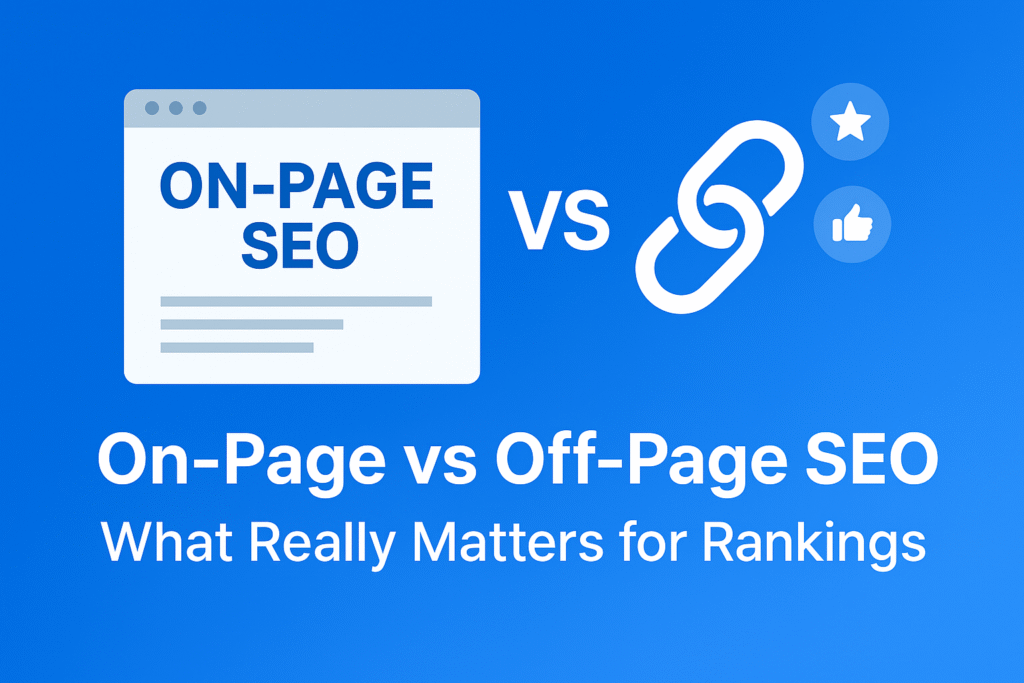
On-Page vs Off-Page SEO: What Really Matters for Rankings
When it comes to search engine optimization (SEO), two terms often dominate the conversation — On-Page SEO and Off-Page SEO. Both are essential for ranking higher on Google, but many businesses struggle to understand which one truly makes the difference.
In this blog, we’ll break down both sides, explain how they work together, and show you what really matters for improving your search rankings in 2025.
1. What is On-Page SEO?
On-Page SEO refers to all the elements you can control directly on your website to improve its visibility and user experience. It ensures that your website is search-engine-friendly and easy to understand for both users and Google’s crawlers.
Key Elements of On-Page SEO:
- Keyword Optimization: Using relevant keywords in titles, headings, and content.
- Meta Tags: Crafting strong meta titles and descriptions that attract clicks.
- URL Structure: Keeping URLs short, descriptive, and keyword-rich.
- Content Quality: Creating valuable, original, and engaging content.
- Internal Linking: Linking related pages to improve site navigation.
- Image Optimization: Using alt tags and compressing images for faster load times.
- Mobile Responsiveness: Ensuring your website works perfectly on all devices.
- Page Speed: Faster websites rank better and provide a superior user experience.
👉 At DigiAtmos, we optimize every aspect of your on-page strategy to ensure maximum visibility and better ranking potential.
2. What is Off-Page SEO?
Off-Page SEO includes all the actions taken outside your website to improve its authority, credibility, and reputation. It tells search engines that other people trust your content — a key ranking factor for Google.
Key Elements of Off-Page SEO:
- Backlink Building: Acquiring high-quality backlinks from trusted websites.
- Social Media Marketing: Promoting content on social media platforms for wider reach.
- Influencer Outreach: Collaborating with influencers or bloggers for backlinks.
- Guest Blogging: Writing articles for reputable websites to build authority.
- Online Reviews & Mentions: Encouraging positive brand mentions and reviews.
Off-page SEO is about building relationships and trust across the internet — both of which help search engines view your website as reliable.
3. On-Page vs Off-Page SEO: The Key Differences
| Aspect | On-Page SEO | Off-Page SEO |
|---|---|---|
| Focus Area | Website content and structure | External signals and backlinks |
| Control | Fully under your control | Depends on third-party actions |
| Purpose | Optimize for search engines and users | Build authority and credibility |
| Examples | Keywords, meta tags, site speed | Backlinks, social shares, mentions |
Both are essential — but together, they create a strong, long-term SEO foundation.
4. What Really Matters for Rankings in 2025
Google’s algorithm has evolved to prioritize quality, trust, and user experience. That means neither on-page nor off-page SEO alone can deliver top rankings.
Here’s what really matters:
- E-E-A-T (Experience, Expertise, Authoritativeness, Trustworthiness)
- High-quality, helpful content
- Relevant backlinks from credible sources
- Mobile-friendly, fast-loading pages
- User engagement metrics (time on site, bounce rate, click-through rate)
In short, a perfect balance of both on-page and off-page SEO is what drives long-term growth.
At DigiAtmos, we help businesses strike that balance — crafting optimized content while building authentic authority online.
5. How DigiAtmos Helps You Grow Organically
At DigiAtmos, we combine technical expertise and creative marketing to deliver SEO strategies that bring measurable growth.
Our services include:
- Comprehensive On-Page SEO Audits
- Advanced Keyword Research
- Link Building and Authority Development
- Content Strategy and Optimization
- Competitor Analysis and Performance Reporting
We don’t just aim for higher rankings — we help you build sustainable digital growth.
Conclusion
The debate between On-Page vs Off-Page SEO isn’t about choosing one over the other.
Both are crucial for improving your visibility, credibility, and conversions.
To win in the modern digital landscape, focus on optimizing your website internally (on-page) and building your brand authority externally (off-page).
If you’re ready to boost your online presence with proven SEO strategies, partner with DigiAtmos today and experience measurable long-term growth.
FAQs
1. Which is more important: On-Page or Off-Page SEO?
Both are equally important. On-page SEO improves your site’s structure and content, while off-page SEO builds authority and trust — both essential for top rankings.
2. How long does Off-Page SEO take to show results?
Typically, off-page SEO takes 3–6 months to show visible results, depending on competition and the number of high-quality backlinks you build.
3. Can I rank high with just On-Page SEO?
Strong on-page SEO can help initially, but to maintain top positions, you need off-page signals like backlinks and brand mentions.
4. How often should I update my On-Page SEO?
Review your website’s on-page SEO at least once every 3–6 months to keep up with algorithm changes and content updates.
5. Why should I choose DigiAtmos for SEO?
DigiAtmos provides data-driven, ethical, and result-oriented SEO strategies — combining both on-page and off-page optimization for sustainable business growth.