In today’s fast-changing digital world, social media isn’t just about sharing posts — it’s about building connections, driving engagement, and achieving business growth.
But one question continues to challenge marketers and brands alike:
Should you focus on organic social media or invest in paid social media?
The truth is, both have their strengths. The key is understanding how they work, when to use each, and how to balance them for the best results.
In this blog, we’ll break down Organic vs Paid Social Media, compare their effectiveness, and help you choose the right mix for your brand.
What Is Organic Social Media?
Organic social media refers to the free content you post — such as photos, videos, stories, and updates — that naturally reach your followers.
✅ It’s about building authentic relationships, engaging with your community, and growing brand loyalty over time.
Examples of organic content:
- Posting regular updates or behind-the-scenes videos
- Sharing blog links or infographics
- Responding to comments or DMs
- Encouraging user-generated content (UGC)
💬 Think of organic social media as your brand’s personality — the voice that connects with people authentically.
Benefits of Organic Social Media
- Builds Trust and Credibility
Organic posts help establish your brand’s personality, mission, and values — building long-term trust. - Cost-Effective
It’s free! While it requires time and creativity, there’s no direct cost like advertising spend. - Drives Long-Term Engagement
Consistent posting helps retain followers, create loyal communities, and encourage word-of-mouth marketing. - Supports Customer Relationships
By replying to comments and messages, brands can offer real-time support and strengthen customer connections.
💡 Best for: Awareness, engagement, community building, and customer service.
What Is Paid Social Media?
Paid social media refers to any post or ad you pay to promote on social platforms like Facebook, Instagram, LinkedIn, TikTok, or X (Twitter).
It allows your brand to reach specific audiences faster — even those who don’t follow you.
Examples of paid content:
- Facebook and Instagram ads
- LinkedIn sponsored posts
- YouTube ads or TikTok promotions
- Retargeting ads for past visitors
💬 Think of paid social as a shortcut — you pay for visibility and faster growth.
Benefits of Paid Social Media
- Instant Visibility
Paid ads help your brand reach thousands (or even millions) instantly — perfect for new launches or promotions. - Advanced Targeting
You can target based on demographics, interests, location, and even behaviors — ensuring your ad reaches the right audience. - Scalable and Measurable
You can set your budget, monitor performance in real-time, and optimize based on results. - Boosts Conversions and Leads
Paid ads often lead to direct results — sales, sign-ups, downloads, or inquiries.
💡 Best for: Lead generation, conversions, and brand awareness campaigns.
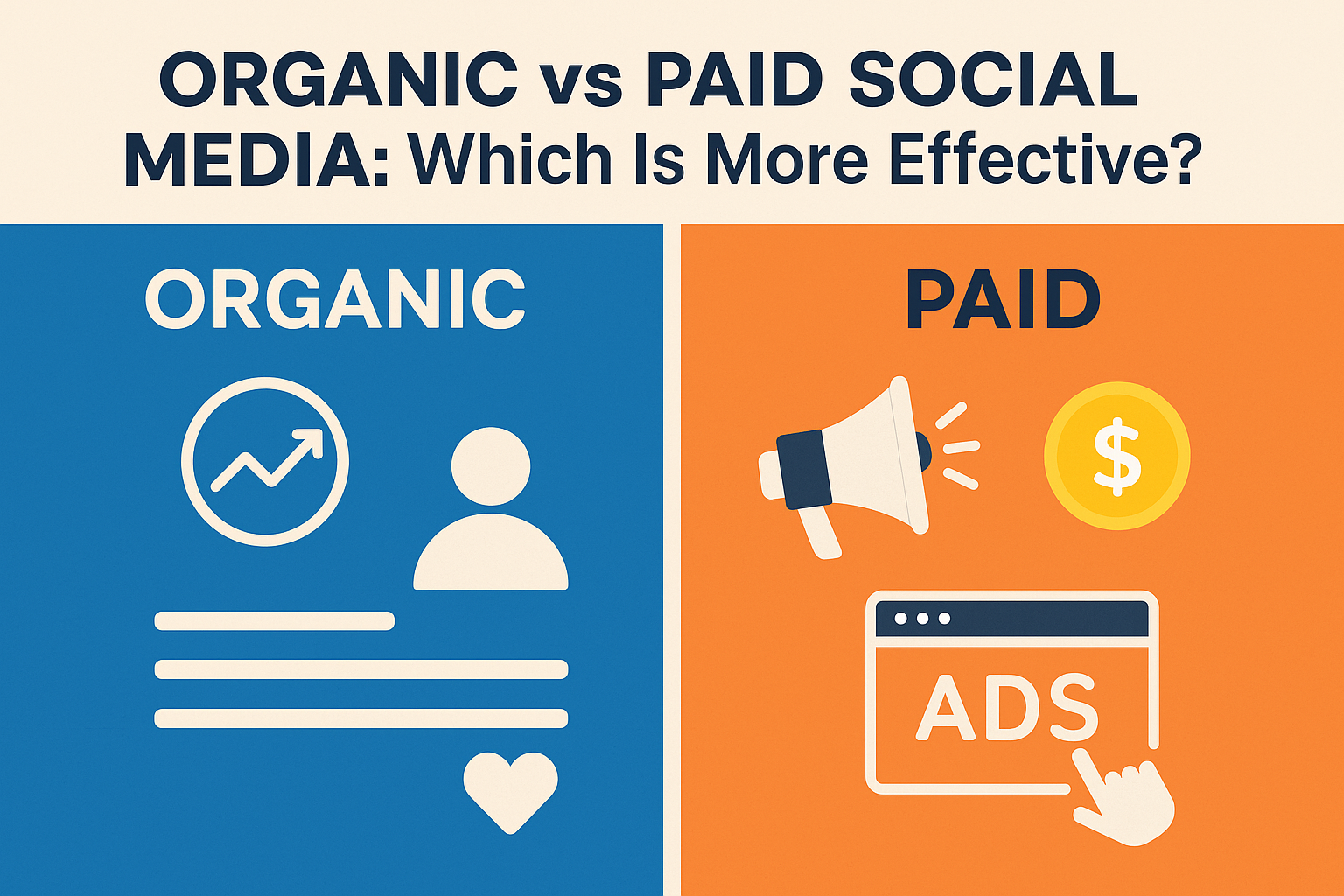
Organic vs Paid Social Media: Key Differences
| Aspect | Organic Social Media | Paid Social Media |
|---|---|---|
| Cost | Free | Requires ad budget |
| Reach | Limited to followers | Broad, targeted audience |
| Speed | Slow, long-term growth | Immediate results |
| Goal | Engagement & trust | Traffic, sales, conversions |
| Measurement | Based on engagement | Detailed analytics & ROI |
💬 Pro Tip: A smart strategy combines both — organic for trust, paid for reach.
Which Is More Effective in 2025?
There’s no single winner — effectiveness depends on your goals.
✅ Organic is best when:
- You’re building a loyal community
- You want long-term relationships
- You have time to grow naturally
✅ Paid is best when:
- You want quick brand exposure
- You’re launching new products
- You’re running time-sensitive campaigns
💡 The best results come from combining both approaches.
How to Combine Organic and Paid for Maximum Results
- Start with Organic to Build Trust
Develop consistent content, engage your audience, and strengthen your brand identity. - Use Paid Ads to Amplify Top-Performing Posts
Promote your best organic content through ads to reach a wider audience. - Leverage Retargeting
Re-engage users who interacted with your organic posts or visited your website. - A/B Test Your Ad Campaigns
Run multiple ad variations to find what resonates best. - Measure, Analyze, and Adjust
Use analytics tools to track engagement, conversion rates, and ROI.
💬 Example: A brand can post organically to build interest, then use paid campaigns to promote offers to the most engaged users.
Final Thoughts
When it comes to Organic vs Paid Social Media, it’s not about choosing one over the other — it’s about finding the right balance.
Organic builds your foundation, while paid gives it momentum.
At DigiAtmos, we help businesses create integrated social media strategies that combine organic growth with paid advertising — ensuring your brand reaches the right audience, builds trust, and drives measurable results.
Whether you’re looking to grow your followers, generate leads, or boost conversions, DigiAtmos can help you design a strategy that truly works.
Frequently Asked Questions (FAQs)
Q1. What’s the main difference between organic and paid social media?
Organic is free and builds relationships over time; paid uses ads to reach a wider audience faster.
Q2. Which is better for small businesses?
Start with organic to build credibility, then use paid ads strategically for growth and visibility.
Q3. How can I get the best results from social media marketing?
Combine organic consistency with paid campaigns, monitor analytics, and optimize regularly.
Q4. Does DigiAtmos offer social media marketing services?
Yes! DigiAtmos provides full-service social media management — from organic growth to paid ad optimization.